Halfautomatische of automatische doppenmachine? Zo kiest u
Het doppen is de stap waarop een goede vulrun nog steeds mis kan gaan. Een dop die te los zit, lekt. Een dop die te vast zit, kan een kraag doen barsten, schroefdraad beschadigen of de afwerking bekrassen. Voor kleine en middelgrote producenten van cosmetica, etherische oliën, CBD-oliën en supplementen is de vraag zelden of ze een machine moeten kopen. De vraag is welk automatiseringsniveau past bij uw batchgroottes, flesformaten en personeel.
Deze gids vergelijkt drie praktische opties uit ons assortiment verpakkingsmachines en legt uit hoe u een keuze maakt aan de hand van gegevens die u al heeft: dopdiameter, fleshoogte, beoogde output en batchgrootte.
Begin met de cijfers die u al kent
Noteer, voordat u machines vergelijkt, deze vijf punten voor elk product dat u vult:
- Buitendiameter van de dop of het sluitsysteem. Elke machine heeft een werkbereik en het sluitsysteem moet ruim binnen dat bereik vallen.
- Fleshoogte. Tafelmodellen beperken de minimale en maximale hoogte onder de doppenkop.
- Type sluiting. Een gewone schroefdop, een druppelaar met mešiček en kraag, een pomp of een sproeier reageren elk anders op rotatie en neerwaartse druk.
- Batchgrootte en aantal formaten. Tien formaten van elk 2.000 stuks is een andere opgave dan één formaat van 50.000 stuks.
- Beschikbare arbeidskracht. Tel hoeveel mensen tijdens een gemiddelde run aan het doppenstation kunnen staan.
Met deze gegevens vallen de drie onderstaande opties snel op hun plaats.
Optie 1: Een schroefgereedschap op een boormachine
De eenvoudigste stap vooruit ten opzichte van volledig handmatig sluiten is een op maat gemaakt schroefgereedschap voor druppelaars en doppen. Het past via een zeskante schacht op een boormachine of schroefmachine. De operator plaatst het gereedschap op de sluiting en de boor draait deze op de fles.
Dit past bij u wanneer:
- u kleine batches draait en vaak van formaat wisselt;
- u druppelaars sluit, waarbij de draaibeweging met de hand over honderden flessen de pols vermoeit;
- u een gelijkmatiger sluiting wilt zonder een speciale machine op de werkbank.
De beperkingen zijn duidelijk. De consistentie hangt nog steeds af van de operator en van de instelling van de boor. Heeft uw boor een instelbare koppeling, stel deze dan in op een paar proefflessen en houd die instelling aan voor de hele run. Controleer gesloten flessen de volgende dag, want een sluiting die op het moment van doppen stevig aanvoelt, kan iets losser gaan zitten.
Optie 2: Een halfautomatische doppenmachine voor op tafel
De De halfautomatische tafeldoppenmachine DDX450 verwerkt doppen van 16 tot 50 mm en flessen van 50 tot 400 mm hoog, met maximaal 30 flessen per minuut op 220 V. De operator plaatst nog steeds de dop op de fles en positioneert de fles, en de machine draait de dop vast.
Dit is een goede keuze wanneer:
- uw sluitingen in het middelgrote tot grote segment vallen, inclusief bredere schroefdoppen;
- uw flessen sterk in hoogte variëren, van kleine flesjes tot hoge flessen;
- u reproduceerbaar wilt vastdraaien zonder een volledige lijn op te bouwen.
Het grote hoogtebereik is het belangrijkste voordeel. Eén machine kan een hele reeks flesformaten aan, zodat een omstelling bestaat uit het aanpassen van de hoogte van de kop en de klemonderdelen in plaats van het wisselen van apparatuur.
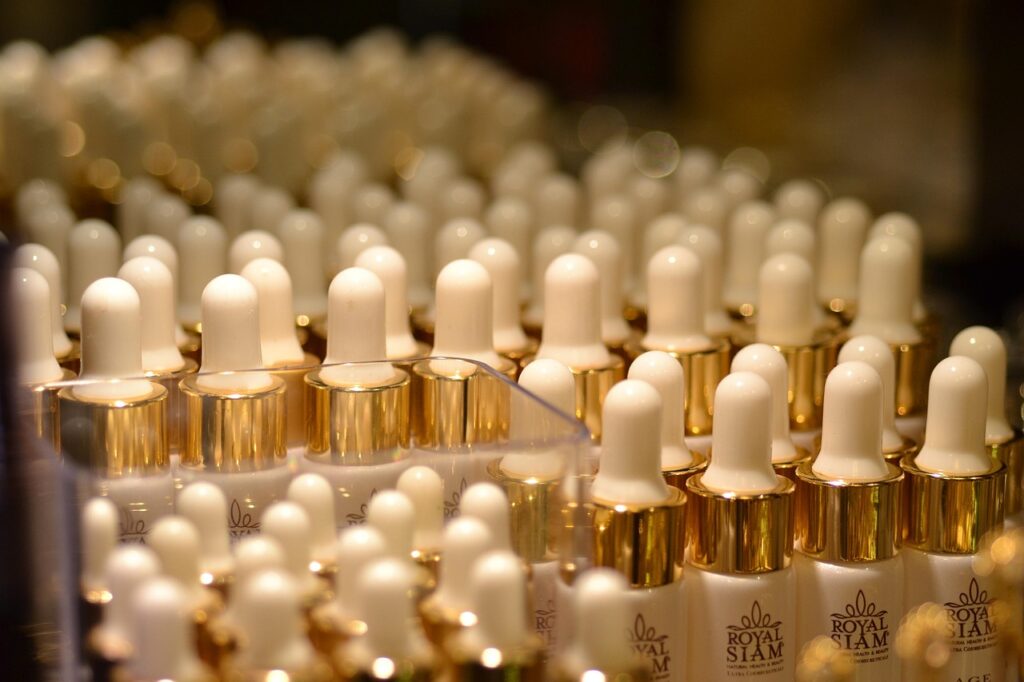
Optie 3: Een automatische enkelkops doppenmachine met transportband
De De automatische enkelkops doppenmachine met transportband voert flessen via een transportband aan en doppt ze automatisch, met maximaal 30 flessen per minuut. Hij is ontworpen voor doppen van 10 tot 30 mm en flessen van 50 tot 150 mm hoog.
Het past bij u wanneer:
- u kleine flessen vult in herhaalde, consistente runs;
- u wilt dat de operator flessen aanvoert in plaats van elke fles afzonderlijk te hanteren tijdens het doppen;
- uw sluitingen binnen het bereik van 10–30 mm vallen.
Het smallere hoogtebereik is de keerzijde. De machine is gebouwd voor kleine flessen, precies waar veel olie- en supplementproducenten mee werken, maar is minder flexibel als uw catalogus ook hoge formaten bevat.
Vergelijking naast elkaar
| Kenmerk | Schroefgereedschap | DDX450 halfautomatisch | Automatisch enkelkops |
|---|---|---|---|
| Dopbereik | Afgestemd op de sluiting | 16–50 mm | 10–30 mm |
| Hoogte fles | Geen machinelimiet | 50–400 mm | 50–150 mm |
| Output | Afhankelijk van de operator | Tot 30 flessen/min | Tot 30 flessen/min |
| Cap placement | Manual | Manual | Automatic on conveyor |
| Vermogen | Your drill or screwdriver | 220 V | See product page |
| Het meest geschikt voor | Small batches, many formats | Mixed heights, wider caps | Repeated runs of small bottles |
Quoted output is a maximum. Real speed depends on closure type, bottle stability and how fast the operator feeds the line.
Do not forget the step before capping
A capper cannot fix a poor fill. If liquids are filled by hand and vary in level, caps may meet drips on the neck threads, which affects both seal and appearance. A semi-automatic pneumatic filling machine with a mixing tank covers 1 to 30 bottles per minute on 110 V or 220 V, and the mixing tank helps with products that need stirring during the run. Matching the filling speed to the capping speed prevents queues of open bottles on the table.
Common mistakes when selecting a capper
- Buying on top speed alone. A fast machine that is difficult to change over wastes more time than a slower flexible one if you run many formats.
- Ignoring the closure design. Dropper assemblies have a bulb or pipette that must stay aligned with the bottle. Test them, rather than assuming a standard screw cap setup applies.
- Skipping a trial run. Always test with your real bottles, closures and liquid, not with substitutes.
- Not checking the neck finish. Thread type and dimensions on the bottle must match the closure. If you are unsure, see our guide on choosing matching components or ask us for advice.
- Forgetting operator training. Even a simple machine needs a written setting sheet so each shift closes bottles the same way.
A simple decision path
- If you run short batches and many formats, start with the screwing tool.
- If your bottles vary widely in height or use wider caps, look at the semi-automatic tabletop machine.
- If you run repeated batches of small bottles with caps from 10 to 30 mm, the automatic single-head machine saves the most handling.
- If volumes grow, you can combine options: keep the drill tool for special runs and use a machine for the core products.
Preparing a test run
Bring a sample set of each bottle and closure to the test: at least a few dozen pieces, not just two or three. Check that every closure seats straight, that the finish is not marked by the gripping parts, and that a closed bottle passes your own leak check after a short rest. Record the settings that worked so your team can repeat them. If you need to check how closures and bottles fit together before buying a machine, we can send component samples.
Veelgestelde vragen
What is the difference between a semi-automatic and an automatic capping machine?
On a semi-automatic machine the operator places the cap and handles each bottle at the capping step. On an automatic machine with a conveyor, bottles move through the capping station on their own, so the operator mainly feeds the line.
Can one capping machine handle all my bottle sizes?
Only within its stated range. The DDX450 covers caps from 16 to 50 mm and bottles 50 to 400 mm high, while the automatic single-head machine covers caps of 10 to 30 mm and bottles 50 to 150 mm high. Check both values against your products.
Is a power drill tool precise enough for closing dropper bottles?
It gives more uniform closing than twisting by hand, especially if you use a consistent drill setting. It remains operator dependent, so run a trial and check closed bottles before starting a full batch.
Should I match filling and capping speed?
Yes. If filling is much faster than capping, bottles wait open on the table. If capping is faster, the capper idles. Aim for similar rates so the line flows evenly.
Ready to compare options for your line? Bekijk de winkel or contact us for samples and advice on matching closures, bottles and machines.