Dropper Teat Incoming Inspection and Seating on DIN18 Collars
Teats are the cheapest part of a dropper and one of the easiest to overlook. Yet a teat that is slightly off, poorly seated or stored badly can lead to slow return, loose fits or customer complaints on a product that otherwise looks perfect. A short, repeatable routine at goods-in and on the assembly line prevents most of these problems.
This guide covers what to check when a carton of rubber teats arrives, how to seat them on DIN18 collars, and how to store them until use. It applies to both NBR and silicone teats.
What you are actually receiving
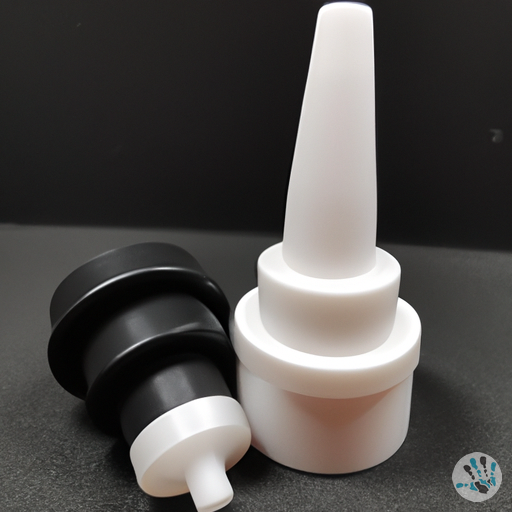
Meie GentleTouch mummusid are rubber teats for glass droppers with DIN18 collars. The range has four variants:
- White NBR, matt finish
- Black NBR, matt finish
- White silicone, glossy finish
- Black silicone, glossy finish
The finish is a quick identification aid. If a carton labeled NBR contains glossy parts, or the reverse, you have a mix-up before you have even opened a bag. Write the material and color on your incoming record, because both are easy to confuse once parts are in bins on the line.
Incoming inspection: a practical routine
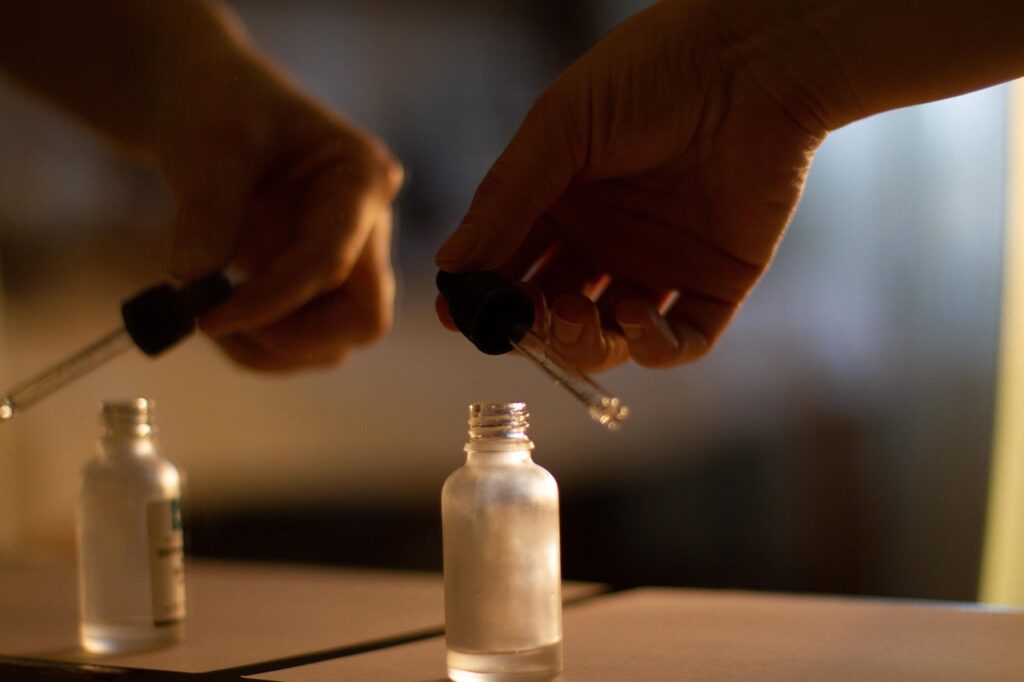
You do not need laboratory equipment. A clean table, good light, a sample of parts from several bags and a few reference items (a collar, a pipette and a bottle from the same order) are enough.
1. Check the carton and bag labels
Confirm product name, material, color and quantity against your purchase order. Check that bags are intact and closed. Dust and fibers on rubber are a nuisance on a line that fills cosmetics or supplements.
2. Visual check on a sample
Take parts from the top, middle and bottom of the carton, not just the first bag. Look for:
- Color consistency between bags, especially for white teats, where yellowing or spotting is easy to see
- Flash or rough edges on the opening where the teat meets the collar
- Cuts, tears or thin spots in the dome
- Foreign particles on or inside the part
- Deformed teats that were squashed in the bag
3. Squeeze and recovery
Squeeze a few teats between thumb and finger and release. They should return to shape at a consistent speed. A part that stays dented or feels clearly different from the rest of the sample should be set aside and compared against a retained reference.
4. Fit check with your own parts
This is the check that matters most. Seat sample teats on the exact collar and pipette you will use in production. Do not rely on the fact that both are labeled DIN18. Collar material, collar wall and pipette top all affect how the teat sits. If you use kaelarõngad in several finishes, test each one.
Inspection table
| Kontroll | How | Set aside if |
|---|---|---|
| Identity | Compare label, color and finish with the order | Material or color does not match |
| Surface | Visual check under good light | Cuts, particles, rough opening |
| Kuju | Squeeze and release | Stays deformed or is inconsistent |
| Fit on collar | Seat on your collar and pipette | Loose, twisting or hard to seat |
| Cleanliness | Look inside the opening and bag | Dust, fibers or residue |
Record the lot or delivery date with the result. If a problem appears later, you can trace it back to a delivery.
Seating teats on DIN18 collars
Teats are normally seated onto the collar as part of dropper assembly. If you assemble yourself, the order is usually: pipette into collar, teat onto collar, then the finished dropper into the bottle. Whatever your sequence, a few habits help.
Keep the work clean and dry
Wet or oily hands make rubber slip and attract dust. Wear clean gloves and change them when they pick up product. Do not use lubricants or solvents on the teat to make it slide on. Some liquids and cleaning agents can affect rubber over time, which is why we have written separate guides on teat materials and chemical contact.
Push straight, not at an angle
Press the teat on in line with the collar axis. Angled pressure stretches one side of the opening and can leave the teat sitting crooked. A crooked teat looks poor on a shelf and can cause uneven squeezing.
Check the seat visually
After seating, the teat should sit evenly all the way around with no visible gap. Check the first parts of each shift and after any change of lot, collar or operator. Keep a physical sample of an acceptable dropper at the station for comparison.
Avoid over-stretching
If a teat needs excessive force, stop and check the collar and pipette rather than pushing harder. Forcing parts can tear the rubber at the opening, and a tear may not be obvious until the product is in use.
NBR or silicone on the line
Both materials seat the same way in principle, but they handle differently. Silicone parts have a glossy surface, and many operators feel they grip differently on the fingers than matt NBR. Check this during your trial run so that operators are not surprised. For guidance on which material suits your formulation, see our article on silicone and NBR teats, and test with your own liquid before committing to a large order. Oils, alcohol-based liquids and active ingredients can all behave differently with rubber.
If you are specifying white teats for a light-colored product, such as a valge NBR-mešiček, remember that white shows marks more easily. Tighter handling rules at goods-in and on the line pay off here.
Hoiustamine enne kasutamist
Rubber parts are best kept in their original sealed bags until needed. General good practice:
- Store in a clean, dry area away from direct sunlight and heat sources
- Keep teats away from solvents, strong cleaning agents and open containers of essential oils or fragrance
- Do not stack heavy cartons on top of each other, so parts are not deformed
- Reseal opened bags and use older stock first
- Keep different colors and materials in clearly labeled, separate containers
If you pull a day’s supply to the line, bring only what will be used in the shift. Returning loose parts to bulk stock is a common source of mixed lots and contamination.
Levinud vead
- Testing fit with the wrong collar. A sample approved on one collar does not guarantee a good fit on another.
- Skipping the lot comparison. Slight color differences between deliveries are easier to catch with a retained sample.
- Mixing black and white at one station. Black teats on a white-product line (or the reverse) are a classic error. Separate bins and clear labels solve it.
- Using solvents to clean or lubricate. This can harm the rubber and leave residues.
- Not testing with the product. Fit is only half the story. Compatibility with your liquid should be checked in a trial.
KKK
Do I need to inspect every teat?
Not usually. Most buyers inspect a sample from each delivery, taken from several bags, and add a fit check with their own collars and pipettes. Define the sample size in your own QC procedure.
Can I use the same teat on any DIN18 collar?
Our teats are made for glass droppers with DIN18 collars, but you should still test your exact combination of collar, pipette and teat before production.
How can I tell NBR from silicone quickly?
In our range, NBR teats have a matt finish and silicone teats a glossy finish. Always confirm against the label and your order as well.
Can I order samples before a large order?
Yes. Samples are a good way to run fit and compatibility trials. Contact us with your collar and pipette details and we can advise on a suitable combination.
Ready to test teats on your own line? Browse the full range in our poes or contact us for samples and advice on matching teats, collars and pipettes.