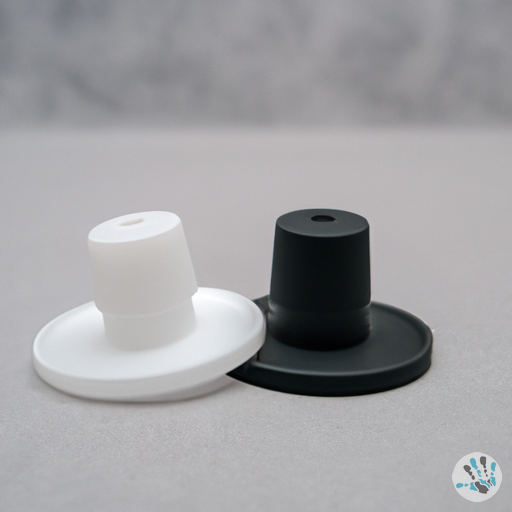
How do I prevent rubber teats for droppers from reacting with hydrogen peroxide?
Introduction
Rubber teats for droppers are commonly used in medical and laboratory settings to dispense liquids. However, when exposed to certain chemicals, such as hydrogen peroxide, rubber teats can react and cause damage. In this article, we will discuss how to prevent rubber teats for droppers from reacting with hydrogen peroxide. We will discuss the types of rubber teats available, the best practices for storing and using them, and the steps to take if a reaction does occur. By following these tips, you can ensure that your rubber teats remain safe and effective.
How to Protect Rubber Teats for Droppers from Reacting with Hydrogen Peroxide
If you’re using rubber teats for droppers, you may be concerned about them reacting with hydrogen peroxide. After all, hydrogen peroxide is a powerful oxidizing agent and can cause damage to rubber. Fortunately, there are a few steps you can take to protect your rubber teats from reacting with hydrogen peroxide.
First, make sure you’re using the right type of rubber. Natural rubber is more resistant to oxidation than synthetic rubber, so it’s a better choice for use with hydrogen peroxide.
Second, keep your rubber teats clean. Dirt and debris can act as catalysts for oxidation, so it’s important to keep your teats free of contaminants.
Third, store your rubber teats in a cool, dry place. Heat and humidity can accelerate oxidation, so it’s best to keep your teats in a cool, dry environment.
Finally, use a protective coating. There are a variety of coatings available that can help protect your rubber teats from oxidation. These coatings can be applied to the teats before use, and they can help extend the life of your teats.
By following these simple steps, you can help protect your rubber teats from reacting with hydrogen peroxide. With a little bit of care, you can ensure that your rubber teats will last for years to come.
The Benefits of Using Non-Reactive Rubber Teats for Droppers
If you’re looking for a safe and reliable way to dispense liquids, then non-reactive rubber teats for droppers are the perfect solution. These teats are made from a special type of rubber that is non-reactive and won’t react with the liquid being dispensed. This makes them ideal for use in a variety of applications, from laboratory experiments to food and beverage production.
The benefits of using non-reactive rubber teats for droppers are numerous. For starters, they are incredibly durable and can withstand a wide range of temperatures and pressures. This makes them ideal for use in a variety of environments, from hot and cold climates to high-pressure situations. Additionally, they are incredibly easy to clean and maintain, which makes them a great choice for those who need to keep their droppers in top condition.
Another great benefit of using non-reactive rubber teats for droppers is that they are incredibly safe. Unlike other materials, rubber is non-toxic and won’t leach any harmful chemicals into the liquid being dispensed. This makes them ideal for use in food and beverage production, as well as in laboratory experiments.
Finally, non-reactive rubber teats for droppers are incredibly cost-effective. They are much cheaper than other materials, such as glass or metal, and can be used for a variety of applications. This makes them a great choice for those who need to keep their costs down while still getting the job done.
Overall, non-reactive rubber teats for droppers are an excellent choice for those who need a reliable and safe way to dispense liquids. They are incredibly durable, easy to clean and maintain, and incredibly cost-effective. Plus, they are incredibly safe, making them ideal for use in a variety of applications. So, if you’re looking for a reliable and safe way to dispense liquids, then non-reactive rubber teats for droppers are the perfect solution.
Understanding the Chemical Reactions Between Hydrogen Peroxide and Rubber Teats for Droppers
If you’ve ever used a dropper to measure out liquid, you’ve probably noticed that the rubber teat at the end of the dropper can become discolored over time. This discoloration is caused by a chemical reaction between the rubber teat and the liquid it’s in contact with. In this blog post, we’ll take a look at the chemical reaction between hydrogen peroxide and rubber teats for droppers.
When hydrogen peroxide comes into contact with rubber, it causes a reaction that breaks down the rubber molecules. This reaction is known as oxidation, and it’s the same process that causes rust on metal. The oxidation process causes the rubber to become brittle and discolored.
The reaction between hydrogen peroxide and rubber is accelerated by heat and light. This means that if you’re using a dropper with hydrogen peroxide in it, you should store it in a cool, dark place to prevent the rubber teat from becoming discolored.
It’s also important to note that the reaction between hydrogen peroxide and rubber can be reversed. If you notice that the rubber teat on your dropper has become discolored, you can restore it to its original color by soaking it in a solution of baking soda and water. This will neutralize the hydrogen peroxide and stop the oxidation process.
Understanding the chemical reaction between hydrogen peroxide and rubber teats for droppers is important for anyone who uses droppers to measure out liquids. By taking the necessary precautions to prevent the rubber teat from becoming discolored, you can ensure that your dropper will last for many years to come.
Conclusion
In conclusion, rubber teats for droppers can be prevented from reacting with hydrogen peroxide by using a non-reactive material such as glass, stainless steel, or plastic. Additionally, it is important to ensure that the rubber teat is not exposed to high temperatures or direct sunlight, as this can cause the rubber to degrade and react with hydrogen peroxide. Finally, it is important to store the rubber teat in a cool, dry place away from any sources of heat or light. By following these steps, you can ensure that your rubber teat does not react with hydrogen peroxide.