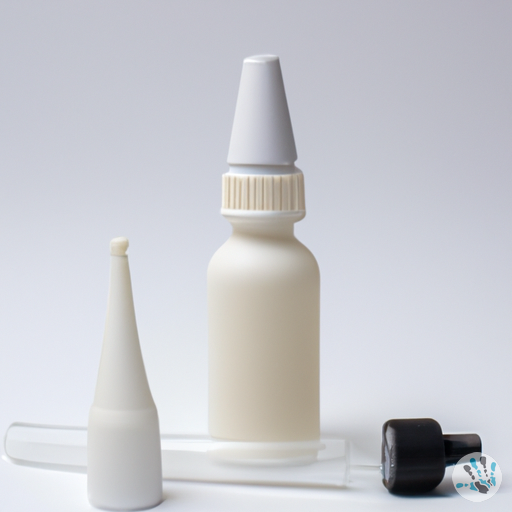
Same Volume, Different Height: Choosing DIN18 Amber Bottles
When you search for a 10 ml amber dropper bottle, you quickly notice that the same volume can appear more than once. In our DIN18/GL18 range, 10 ml is offered at two heights, and so is 5 ml. The neck finish is identical, so every variant takes the same droppers, caps and plugs. The difference is the bottle body.
This article explains when the height matters, what to compare before you order, and how to avoid surprises when the bottle meets a pipette, a label or a filling line.
Which sizes come in more than one height?
Within the Dropper Bottles “DIN18/GL18” category, several nominal volumes have two variants. These are the ones where you have a real choice:
| Nominal volume | Shorter variant | Taller variant | Height difference |
|---|---|---|---|
| 5 ml | 50 mm | 53.2 mm | 3.2 mm |
| 10 ml | 59.2 mm | 63.7 mm | 4.5 mm |
| 25 ml | 71 mm | 76.5 mm | 5.5 mm |
The heights above are the product-page values for the bottle itself. They do not include the closure. The 25 ml pair is covered in more detail in our article on 25 ml amber bottles, so here we focus on the 10 ml case, which is the most common in practice.
Why a few millimeters matter
A difference of 3 to 5 mm looks trivial on paper. In a finished dropper product it can affect several things at once.
1. Pipette fit
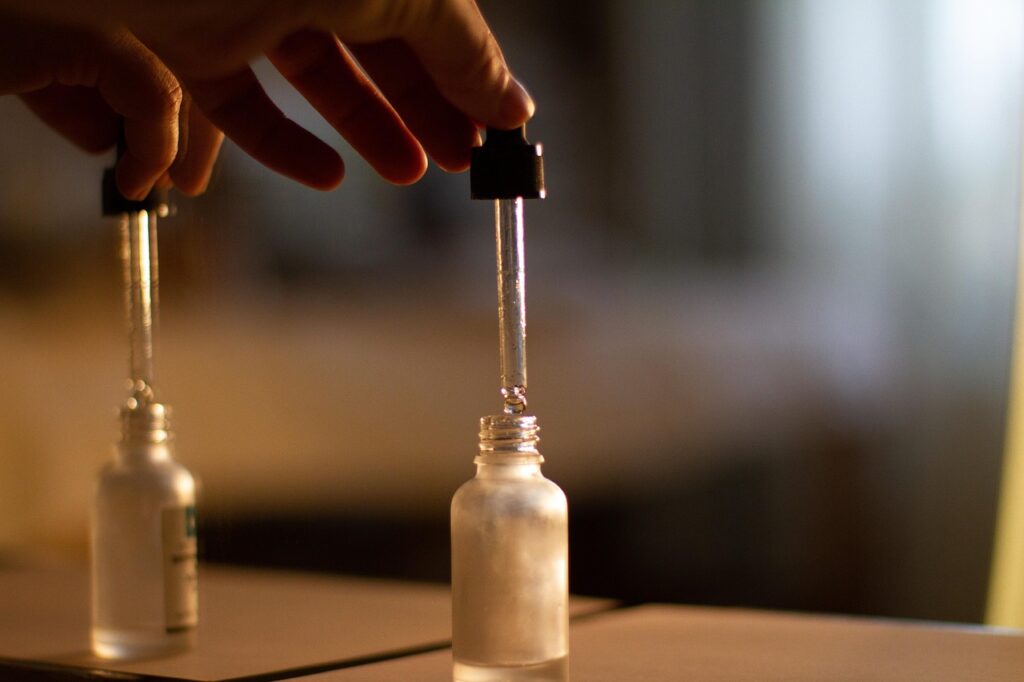
A dropper pipette has to reach close to the bottom of the bottle so the user can draw up most of the contents. If the pipette is too short, product is left behind. If it is too long, it can touch the bottom or sit at an angle. A taller bottle of the same nominal volume usually needs a longer pipette than the shorter one. If you already have a pipette length approved for a specific bottle, do not assume it carries over to the other height variant.
Our glass pipettes can be matched to the bottle you choose. Tell us the bottle variant when you request a quote or samples, and we will assemble the dropper accordingly.
2. Fill level and headspace
Two bottles with the same nominal volume are not necessarily shaped the same way. A taller body may be slimmer, and a shorter one wider. That can change where the liquid sits relative to the neck at your target fill volume. Always fill test samples to your real fill volume and check how the product looks in the bottle and how much room remains under the closure when the pipette is inserted. Do not rely on the nominal volume alone.
3. Label area
The label panel on the bottle is limited. A few millimeters of height can decide whether a label fits cleanly or sits too close to the shoulder or the base. If you use a wrap-around label, regulatory text and batch information may already be tight. Apply a real label to a sample before you commit to a pack size.
4. Filling line and secondary packaging
Filling needles, star wheels, capping heads and carton inserts are often set for one specific height. A 4.5 mm change can mean a format adjustment on the line or a folding carton that is too tight or too loose. If your inner cartons are already printed, the dropper-assembled height (bottle plus closure) is the dimension that counts.
Choosing between the two 10 ml bottles
The 10 ml amber bottle at 59.2 mm is the more compact option. The 10 ml amber bottle at 63.7 mm is taller. Both have the DIN18 (GL18) neck finish and both are compatible with our DIN18 droppers, caps and plugs.
These questions help you decide:
- Do you already have a carton or display format? Pick the variant that fits it with the closure fitted.
- Is a specific pipette length already approved? Stay with the bottle it was approved on, or re-validate the pipette.
- How large is the label? Test the real label on both samples.
- Is the product viscous? Thicker liquids tend to cling to the pipette and the bottle wall, so check how well the product draws up and how much remains in the bottle.
- Does your line run several sizes? A height close to your existing formats can save changeover time.
The same logic applies to 5 ml. A sample set of both heights costs little compared with a printed label run or a reordered carton.
What stays the same across the DIN18 range
The neck finish is the constant. Every bottle in the category uses DIN18 (GL18), so you can change bottle size without changing your closure system. That has practical benefits:
- One family of DIN18/GL18 dropper bottles can serve multiple products, from 2.5 ml samples up to 100 ml.
- Caps, plugs, teats and collars can be kept as common components across product lines.
- Switching a product from one volume to another is a bottle and pipette decision, not a full redesign.
The heights still differ from size to size, so the pipette is the part that has to be re-checked each time.
A simple sampling routine before you order cartons
- Request samples of both variants with the closure and pipette you intend to use.
- Fill to your real fill volume using your actual product, not water, if the viscosity differs.
- Check the pipette position. It should sit near the bottom without bending or lifting when the closure is tightened.
- Apply a real label. Check edges, overlap and legibility.
- Test it in your carton and on your line. Look at height clearance and handling.
- Record the exact variant, including its height, in your packaging specification and purchase order.
Step 6 is the one most often skipped. If your specification only says “10 ml amber DIN18 bottle,” a reorder may be ambiguous. Writing down the height removes the guesswork for everyone involved, including your purchasing team and ours.
Common mistakes with height variants
- Ordering by volume only. The nominal volume does not tell you the height.
- Reusing a pipette length across variants without checking the fit.
- Designing the carton around the bottle only, not the finished dropper with its closure.
- Mixing variants in one batch. Two heights in the same production run lead to uneven pipette position and a visibly inconsistent pack.
- Skipping the label test. Artwork that looks right on screen can collide with the shoulder on the real bottle.
FAQ
Are the two 10 ml DIN18 bottles interchangeable?
They share the same DIN18 (GL18) neck finish, so the closures fit both. They are not interchangeable in every respect: the height differs, so the pipette length, label position and carton fit should be checked for each.
Do I need a different pipette for the taller bottle?
Often yes. The pipette should reach close to the bottom of the bottle. Tell us which bottle you use and we can help you match the pipette length.
Can I mix both variants in one production run?
We do not recommend it. Keeping a single variant per product gives a consistent look, consistent pipette position and fewer line adjustments.
Do the height values include the closure?
No. The heights listed on the product pages describe the bottle only. Add the closure and pipette when you plan cartons and line clearance.
Not sure which height suits your product? Browse the full range in our shop, or contact us for samples and advice on matching bottles, pipettes and closures.