Straight-Tip Glass Pipettes on the Line: Handling and Assembly
A straight-tip glass pipette looks like the simplest part in a dropper. It is a glass tube with a plain tip. On a production line, though, it is also the most fragile part and the one most often blamed when a batch drips, chips or draws poorly. Most of those problems start with handling and assembly, not with the pipette itself.
This guide is for production managers and buyers who run DIN18 dropper assembly, by hand or on a machine. It covers pairing the pipette to the bottle, feeding and orientation, teat seating, and the checks that catch problems early.
What “straight-tip” means for your line
A straight-tip pipette has a plain, open end with no narrowed or drawn-out tip profile. In practice this has three effects:
- The tip has a clean, flat edge that you should inspect for chips before assembly.
- The pipette can sit close to the bottle bottom, so length matters more than it first appears.
- Drop size and flow depend on how the pipette works with the teat, the liquid and any orifice reducer, not on a shaped tip alone.
The ClearFlow glass pipettes are straight-tip pipettes for DIN18 dropper bottles. The range covers eight lengths, each matched to a common bottle volume.
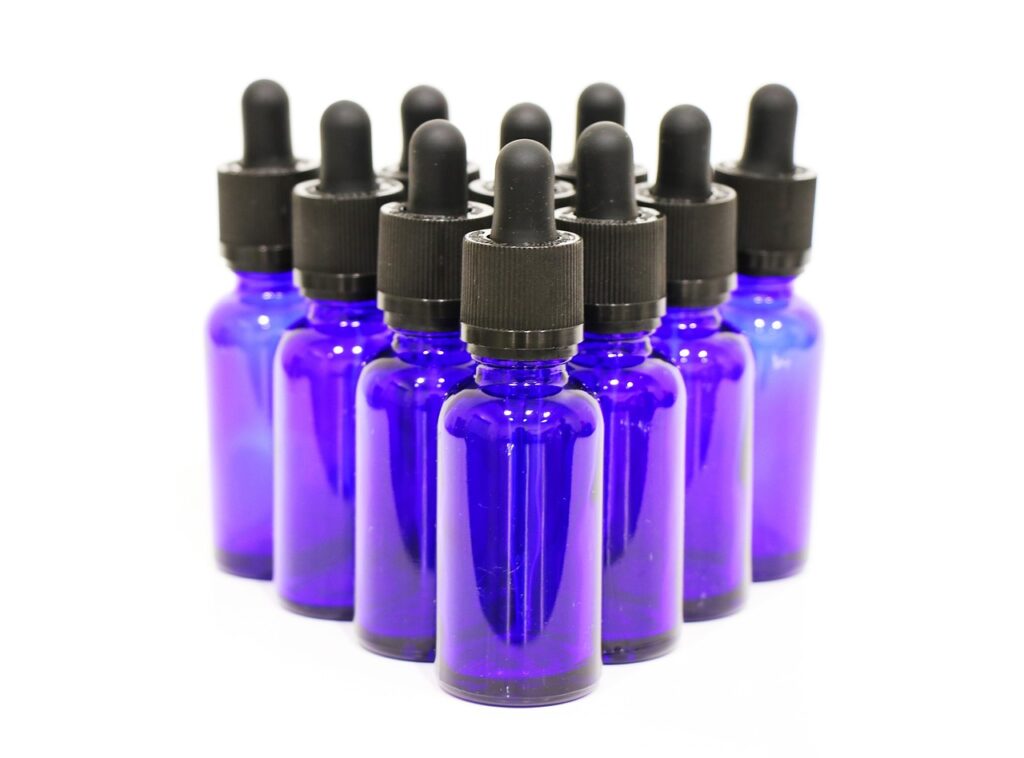
Pair the pipette to the bottle first
Before you look at anything else, confirm that the pipette length matches the bottle. A pipette that is too long can press on the bottle bottom. One that is too short leaves product behind and makes the last dosing difficult.
| Bottle volume (DIN18 neck) | Straight-tip pipette length |
|---|---|
| 5 ml | 48 mm |
| 10 ml | 58 mm |
| 15 ml | 63 mm |
| 20 ml | 70 mm |
| 30 ml | 77 mm |
| 50 ml | 90 mm |
| 60 ml | 91 mm |
| 100 ml | 108 mm |
Note that the 50 ml and 60 ml pipettes differ by only 1 mm. If you run both sizes in the same plant, this is a classic mix-up. Label cartons clearly, keep the two sizes in separate areas and check the first assembled unit of every changeover.
The lengths above are the ones listed for our pipettes. Bottle shapes from different sources can vary, so always test a few units with your own bottles before you order a full production run. For a deeper look at length selection, see our existing guidance on pipette sizing. The matching bottles are in the DIN18/GL18 dropper bottles category.
Incoming handling and storage
Glass pipettes should be treated as fragile from the moment the carton arrives.
- Open cartons at the point of use. Moving open boxes around the plant is how tips get chipped.
- Do not drop-pour pipettes into trays. Slide or lay them down in small groups.
- Keep sizes separate. Store one length per tray or bin, labeled with the size and the bottle it fits.
- Keep them dry and clean. Dust and moisture on glass can transfer to your product and make feeding less reliable.
- Quarantine damaged cartons. A crushed carton often means hidden chips, so inspect it before release.
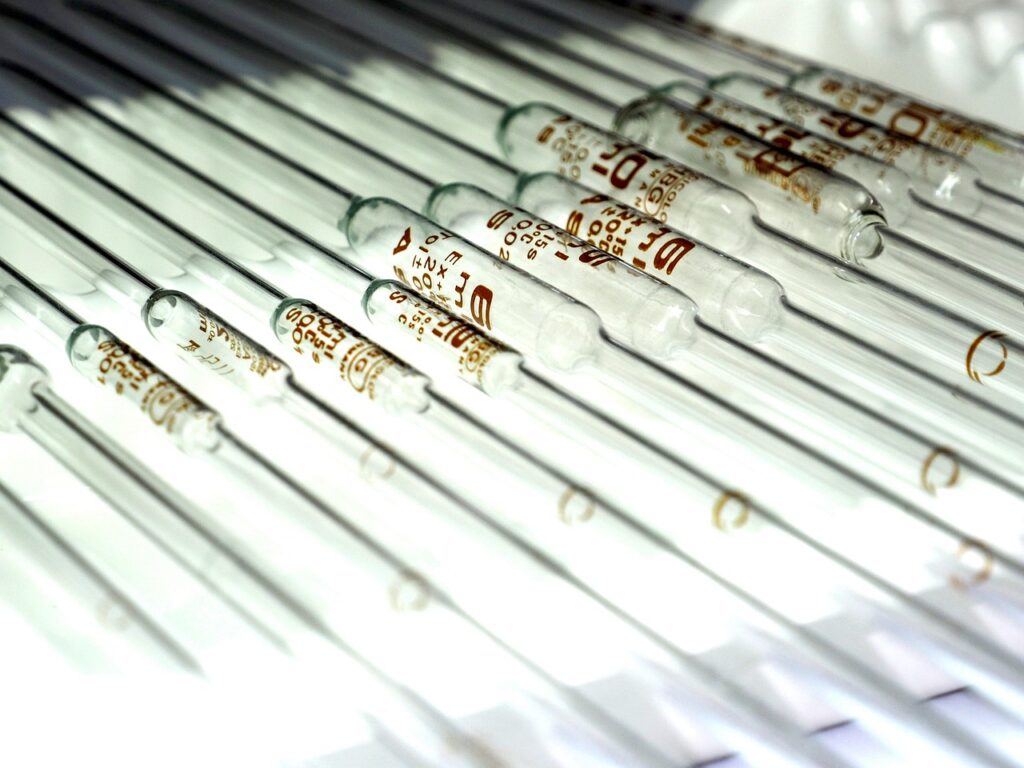
Feeding and orientation
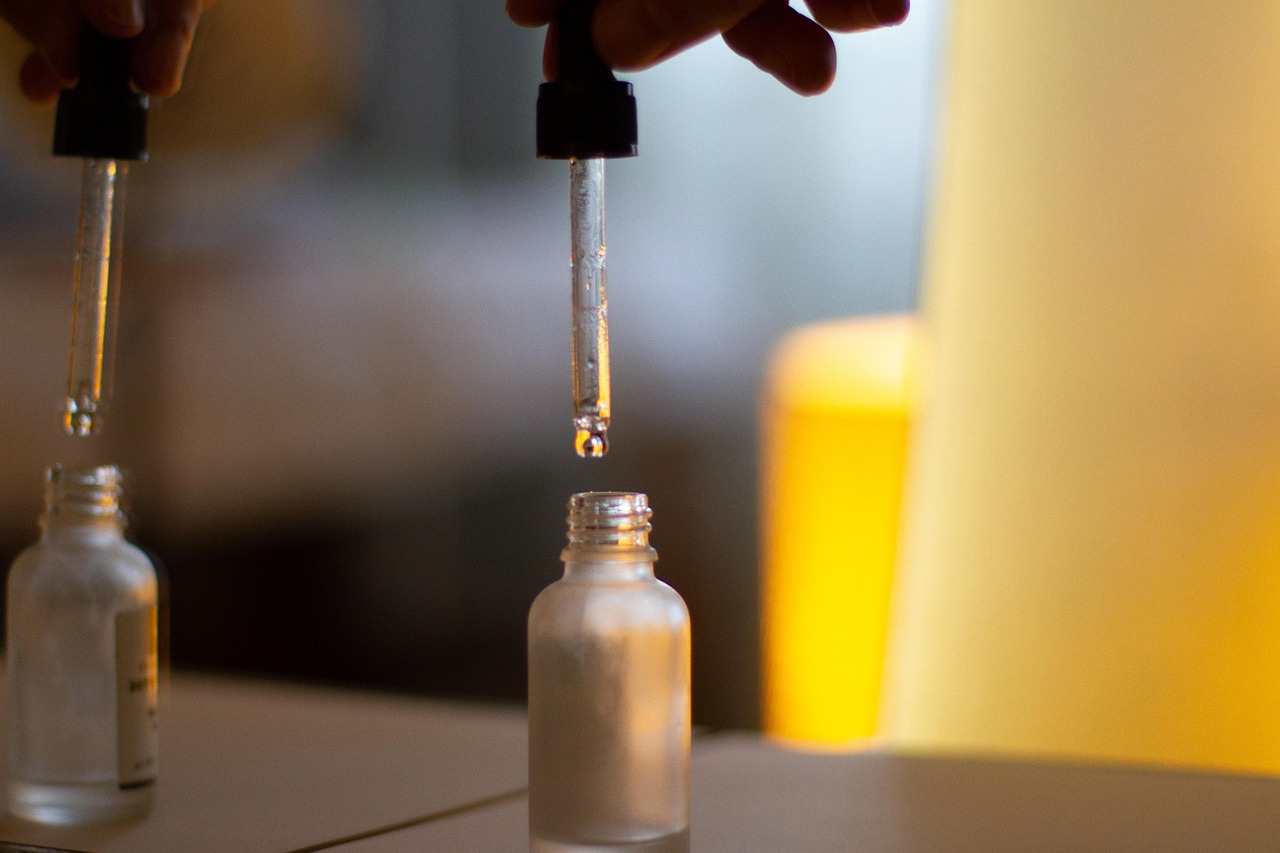
For hand assembly, the main risk is operator fatigue. Pipettes are picked up by the wide end and lowered tip first into the bottle. A few simple measures help:
- Use a shallow tray with a non-slip liner so pipettes do not roll.
- Limit how many pipettes an operator holds at once.
- Place a soft mat under the work area. A dropped pipette on a mat often survives. On a steel bench it rarely does.
For semi-automatic or automatic lines, orientation is the bigger issue. Straight-tip pipettes have no tip profile to guide a bowl feeder, so the feed needs to be designed for a smooth cylinder. Tell your machine supplier the exact lengths you run. If you are comparing equipment, our packaging machinery category is a good place to start.
Teat seating and collar fit
The pipette is only one part of the assembly. It works together with the teat and the collar, and most leaks and poor draw come from how the three fit together.
Seat the pipette fully in the teat
The top of the pipette must sit properly inside the teat. If it is only partly inserted, the teat can slip off during use or let air in. Check this by gently pulling on the teat on a sample of each batch.
Match the teat to the liquid
Oils, alcohol-based liquids and water-based products can affect teat materials differently. Our teats come in different materials. Confirm compatibility with your formulation by running your own stability and compatibility testing before launch.
Check the collar and closure
The collar holds the assembly on the bottle and sets the final alignment. Overtightening can push the pipette against the bottom of the bottle or stress the teat. Undertightening risks leaks. Set your torque or hand-tightening standard on a sample and write it into your work instruction. Our collars are available in several finishes and closure styles.
Checks to build into the line
You do not need a complex quality plan. A short routine catches most problems.
At the start of each shift or changeover
- Confirm the pipette length against the bottle size on the work order.
- Inspect a sample for tip chips and cracks, using good light.
- Assemble one complete unit and check the tip clearance from the bottle bottom.
During the run
- Pull-test a few teats at regular intervals.
- Squeeze-test finished droppers to see that they draw and release liquid smoothly.
- Remove and record any pipette with visible damage rather than reusing it.
At the end of the run
- Count the unused pipettes and return them to labeled storage.
- Sweep up broken glass immediately and keep it away from the packing area.
Common mistakes to avoid
- Mixing the 50 ml and 60 ml pipettes. The 1 mm difference is hard to see by eye.
- Skipping a tip inspection. A chipped tip can affect drop formation and is a quality issue for the customer.
- Treating one sample as proof. Test a reasonable number of units, not just one.
- Changing the teat or collar without retesting. A new combination is a new assembly, even if the pipette stays the same.
- Using the pipette for dosing claims it was not designed for. If you need a printed scale, look at the GraduFlow graduated pipettes instead.
When to consider pre-assembled droppers
If your team spends more time on assembly than on filling, or breakage is eating into your margins, ask about pre-assembled dropper closures. We assemble glass dropper closures from teats, collars and pipettes, and you receive them ready to fit to your bottles. This removes the fragile handling step from your plant.
FAQ
Can I use one pipette length for several bottle sizes?
It is not recommended. Each length is matched to a bottle volume. Using one that is too long risks contact with the bottle bottom, and one that is too short reduces how much liquid you can draw.
How do I tell the 50 ml and 60 ml pipettes apart?
They differ by 1 mm in length. Keep them in separate, labeled containers and measure a sample at changeover. Do not rely on visual comparison.
Do straight-tip pipettes need inspection before use?
Yes. Check a sample from every carton for chipped or cracked tips, and set aside any damaged units. A simple visual check in good light is usually enough.
Can I request samples before ordering a full carton?
Yes. Contact us with your bottle size and liquid, and we can advise on the right pipette and discuss samples for your line tests.
Ready to match pipettes to your bottles? Browse the shop or contact us for samples and advice on your dropper setup.