DIN18 Spray Pump Checklist: Fit, Liquids and Line Tips
A spray pump looks simple: a collar, an actuator and a dip tube. In production it is a small dosing system, and it only performs well when the bottle, the pump and the liquid suit each other. This checklist is for buyers and production managers who plan to add a fine-mist spray pump to a DIN18 (GL18) glass bottle, whether for a facial mist, a body oil spray, a room or pillow spray, or another liquid product.
When a spray pump is the right format
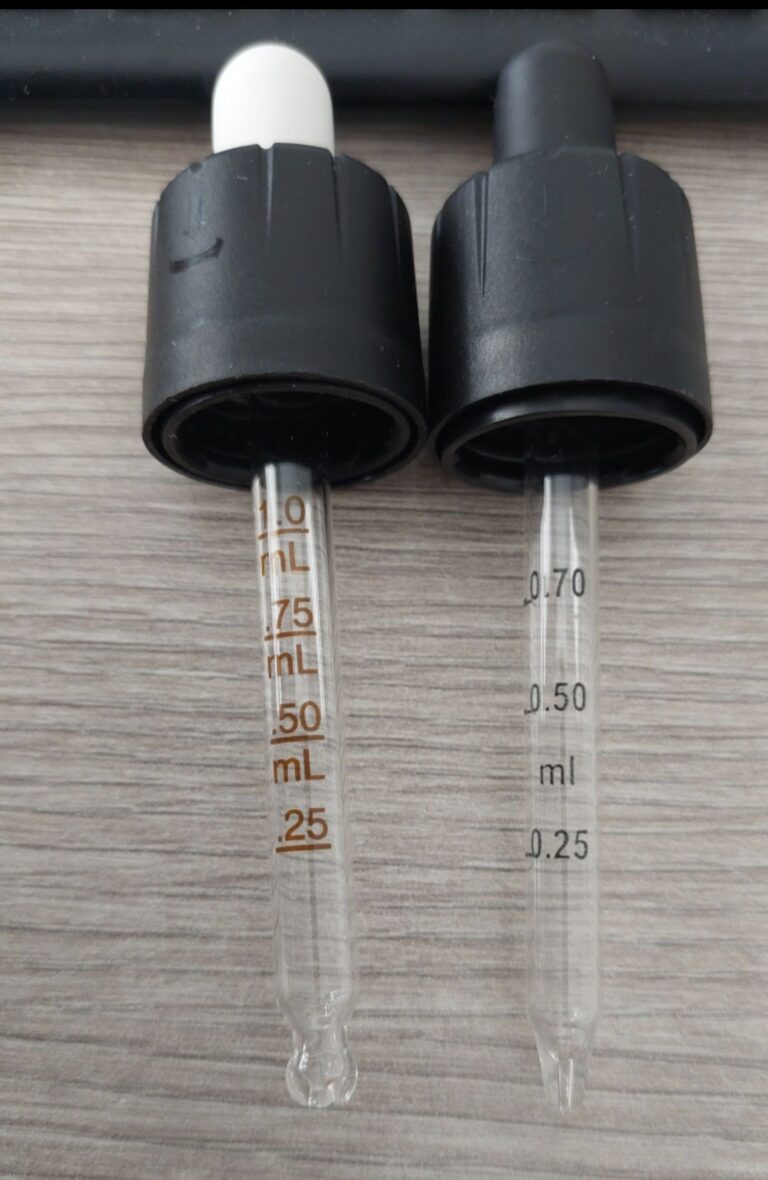
Droppers and sprayers solve different problems. A dropper gives you controlled, visible dosing. A spray gives you even coverage over a larger area with no contact between the product and the user’s hands or the applicator.
A spray pump usually makes sense when:
- the product is thin and flows easily, such as a toner, hydrosol, mist or light oil blend;
- the user needs to cover skin, hair, fabric or a surface rather than count drops;
- you want an applicator that stays clean between uses;
- you already use DIN18 bottles and want a second dispensing option on the same glass.
If the dose must be measured exactly, or the product is thick, a DIN18/GL18 dropper bottle is normally the better choice.

Step 1: Confirm the neck finish
Our FineMist sprayers are made for DIN18 (GL18) necks. Before ordering, check the neck of the bottles you actually plan to use rather than relying on the name alone. Glass is a molded material, and neck dimensions vary between bottle models.
Do this on a sample, not on paper:
- Thread a pump onto three to five bottles from different cartons.
- Check that the thread engages smoothly and the collar sits straight.
- Look for a gap between the collar and the bottle shoulder.
- Unscrew and re-seat once to see whether the fit stays consistent.
Our DIN18 compatibility checklist for droppers and roll-ons uses the same logic, and most of it applies to sprayers too.
Step 2: Match the dip tube to the bottle height
The dip tube must reach close to the bottom of the bottle so the pump can draw the last of the liquid. If it is too short, product is left behind. If it is too long, it can bend or curl against the bottom, which can cause weak or interrupted spray.
Bottle height is the variable. A 30 ml and a 50 ml bottle can look similar in diameter but differ in height, so test the pump on the exact bottle you will use. If the tube needs adjusting, discuss it with us before you place a large order.

Step 3: Choose the collar and actuator
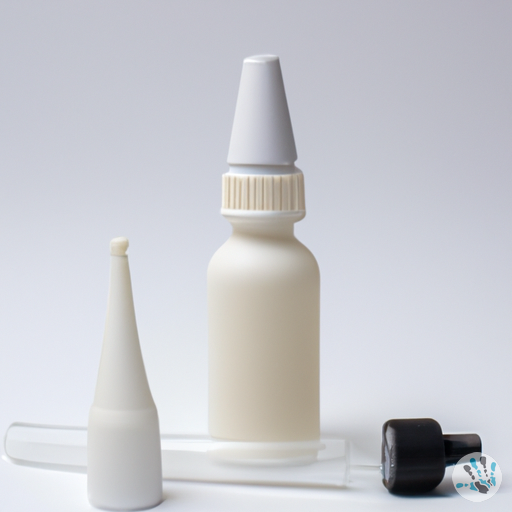
The two sprayers in this category share the same fine-mist function and clear actuator. The difference is the collar:
- DIN18 spray pump with white ribbed collar and tamper-evident ring: the ring shows whether the pack has been opened, which many brands want for retail and online sales.
- DIN18 spray pump with black ribbed collar and clear actuator: a darker look that suits amber glass and a more premium or minimalist design.
The clear actuator stays neutral next to either collar. Choose by brand look first, then by whether you need tamper evidence. If you sell to consumers online, tamper evidence is worth considering. If your pack goes into another carton or a sealed kit, it may not be needed.
Step 4: Test your liquid, not a similar one
Spray performance depends on the liquid. Viscosity, solids, alcohol content and surface tension all change how the mist forms. A pump that sprays water well may behave differently with an oil blend or a formula with suspended particles.
Before committing to a production run, test with your real formulation:
- Check that the pump primes and sprays consistently over several presses.
- Look at the spray pattern on paper or a dark surface for spitting or streaks.
- Leave a filled sample for several days and spray again to see whether crystals, residue or clogging appear at the nozzle.
- Ask your formulation or quality team to confirm compatibility of the plastic parts with your ingredients, especially for solvents, fragrance components and essential oils.
We do not publish chemical resistance data for liquids we have not tested with you, so run your own compatibility and stability tests as part of your normal development process.
Quick reference: pre-order checks
| Check | What to look for | When |
|---|---|---|
| Neck fit | Smooth thread, straight collar, no gap | Sample stage |
| Dip tube length | Reaches the bottom without bending | Sample stage |
| Spray pattern | Even mist, no spitting | With your real liquid |
| Stability | No clogging or residue after standing | Several days or longer |
| Leak test | No seepage when tipped or transported | Before launch |
| Collar type | Tamper-evident ring or plain black | Design stage |
Filling and assembly tips
Leave headspace
Do not fill to the brim. The pump body and dip tube displace liquid when inserted, and overfilled bottles can push product out of the neck or into the collar thread.
Insert the pump straight
Lower the pump vertically so the dip tube does not catch on the bottle shoulder. On a manual line, a simple guide or a steady hand is enough. On a machine line, check alignment before running a full batch.
Apply consistent torque
Tighten every unit the same way. Too loose and the pump may leak or loosen in transit. Too tight and you risk damaging the collar or, with the tamper-evident version, the ring. If you tighten by machine, set the torque on trial units and keep a record. Our range of packaging machinery includes options for capping if you are moving from manual to semi-automatic work.
Prime before packing
A new pump has air in the system. Pressing it several times fills the tube and brings the pump up to normal spray. Decide whether you prime in production or leave it to the customer, and say so in the instructions. Priming in production gives a better first impression, but you must then clean any spray residue from the actuator.
Common mistakes to avoid
- Assuming any DIN18 bottle will do. Check height and neck finish on the real bottle.
- Testing with water only. Your product will not behave like water.
- Skipping a transit test. Ship a few filled samples in your usual carton and inspect them on arrival.
- Mixing collar types in one batch. White tamper-evident and black plain collars look different; keep lots separate and labeled.
- Ignoring storage. Store pumps in their original bags or cartons, away from dust, so the nozzle is clean when you assemble.
Incoming inspection
When a carton arrives, open a sample and check the count against the delivery note, look for deformed collars or bent tubes, and spray-test a few units on an empty bottle with water. Keep the lot number from the carton so you can trace any issue later. Our ISO 9001:2015 certified process covers our own assembly and dispatch, but your own incoming check remains the best protection for your product line.
FAQ
Do these spray pumps fit standard DIN18 bottles?
They are designed for DIN18 (GL18) necks. Because bottle dimensions vary slightly between models, test a few samples on your chosen bottle before ordering a full carton quantity.
Which collar should I choose: white tamper-evident or black?
Choose the white ribbed collar with the tamper-evident ring if you want visible proof that the pack has not been opened. Choose the black ribbed collar if you prefer a darker look and do not need the ring.
Can I use the sprayer with thick oils?
Fine-mist pumps work best with thin, free-flowing liquids. Thicker products may spray poorly or not at all, so test your formula first. For viscous oils, a dropper is often the better format.
Can I order samples first?
Yes. Sampling is the best way to check fit, spray pattern and appearance with your own bottle and liquid before committing to a larger order.
Ready to test a spray pump on your bottle? Browse the shop or contact us for samples and advice on matching sprayers, bottles and closures.