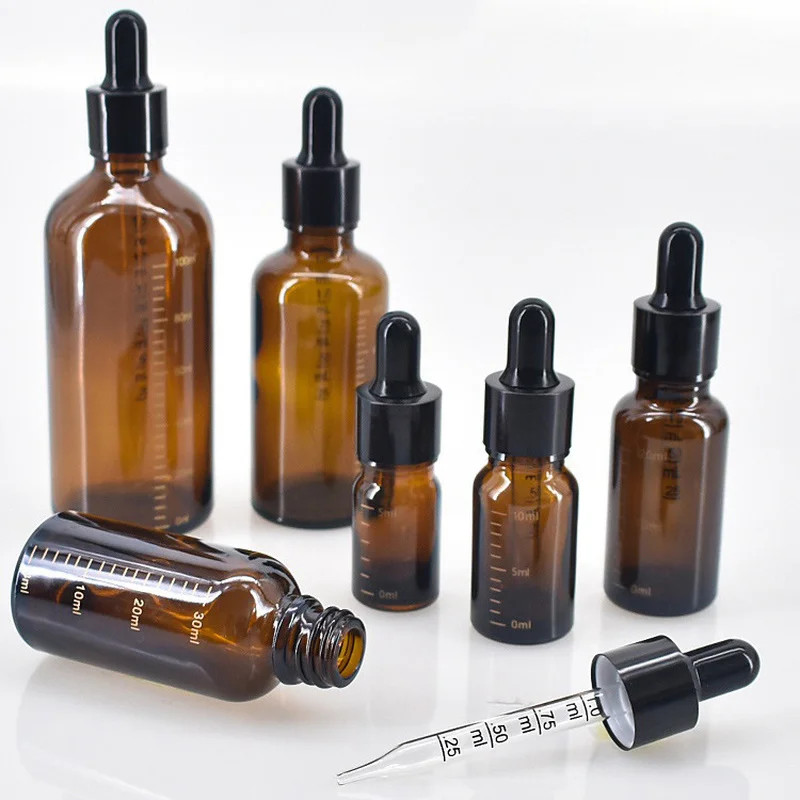
PPWR and Glass Dropper Bottles: What Cosmetic, CBD and Supplement Brands Need to Know
Since 12 August 2026, the EU Packaging and Packaging Waste Regulation – Regulation (EU) 2025/40, better known as the PPWR – has been in application. As a regulation, it applies directly in every Member State without national transposition.
For brands that fill serums, essential oils, CBD oils or food supplements into glass dropper bottles, the PPWR is not a distant 2030 problem. Some obligations already apply today, others arrive in 2028 and 2030. This article explains what matters for a typical dropper bottle – glass bottle, plastic collar, rubber teat and glass pipette – and what you should be asking your packaging supplier for now.
Who is the “manufacturer” under the PPWR?
This is the first point that surprises many small brands. Under the PPWR, the manufacturer is generally the company that has packaging designed or manufactured and places it on the market under its own name or trademark – in practice, very often the brand that fills and labels the bottle, not the glassworks or the company that assembles the dropper.
The companies that supply bottles, droppers and components are suppliers. Their job is to give the manufacturer the technical information needed to demonstrate compliance. There is a narrow exception for micro-enterprises sourcing packaging from a supplier in the same Member State, but most brands should assume the manufacturer obligations sit with them.
If you import already-filled products from outside the EU, the importer takes on obligations as well. And if your business sells into the UK: Great Britain is outside the PPWR and runs its own packaging extended producer responsibility (EPR) scheme, so check UK requirements separately.
What already applies from 12 August 2026
1. EU declaration of conformity and technical documentation
Before packaging is placed on the market, the manufacturer must carry out a conformity assessment, draw up technical documentation and issue an EU declaration of conformity (DoC) for the packaging. The DoC confirms that the packaging meets the PPWR’s sustainability requirements. Documentation should be kept for five years for single-use packaging (ten years for reusable packaging) and updated whenever the packaging changes.
For a dropper bottle, “the packaging” is the complete unit: bottle and closure system. A DoC that covers only the glass while ignoring the collar, teat and pipette leaves a gap in your file.
2. Substance restrictions
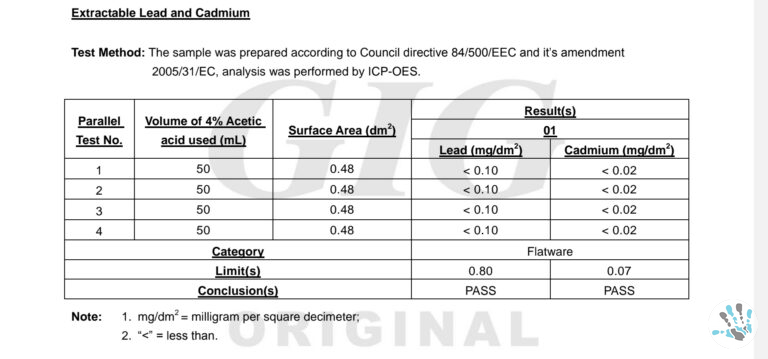
- Heavy metals: the combined concentration of lead, cadmium, mercury and hexavalent chromium in packaging or its components must not exceed 100 mg/kg. This limit existed under the old directive, but under the PPWR it becomes part of the documented conformity file. Glass has a specific derogation where the limit is exceeded only because of recycled cullet and the metals were not intentionally added.
- PFAS in food-contact packaging: limits of 25 ppb for any individual PFAS, 250 ppb for the sum of targeted PFAS and 50 ppm for total fluorine apply to food-contact packaging. This is relevant if you bottle food supplements or ingestible oils. For cosmetics, the PFAS limits of the PPWR do not apply in the same way, though other chemical legislation still does.
3. Identification and traceability
Packaging must carry information that allows it to be identified (such as a type, batch or serial number), and the manufacturer’s name, trademark and postal address must be available on the packaging or, where that is not possible, in an accompanying document. On a 10 ml bottle, space is tight, so plan your label and outer carton accordingly.
4. Producer registration (EPR)
The company that first makes packaged products available in a Member State must be registered in that country’s producer register and participate in the national EPR system. If you ship directly to customers in several EU countries, check registration requirements in each one.
What comes later: 2028 and 2030
| Date | Obligation | What it means for droppers |
|---|---|---|
| From August 2028 (via implementing acts) | Harmonised labelling of material composition and sorting pictograms | Expect artwork changes on labels and cartons. |
| 1 January 2030 | Design-for-recycling criteria; only recyclability grades A, B or C allowed | Separability of glass, plastic and rubber parts becomes a design question. |
| 1 January 2030 | Packaging minimisation (weight and volume) | Oversized outer packaging and excess empty space must be justified. |
| 1 January 2038 | Only grades A and B allowed | Long-term pressure towards mono-material or easily separable designs. |
Detailed recyclability criteria for each packaging category are still being developed through delegated acts, so the exact grade of a given dropper design is not yet fixed. What is clear is the direction: components that consumers can separate easily, and materials that existing recycling streams can handle, will be favoured.
Why glass droppers are in a relatively good position
Glass is inert, widely collected and recycled in closed loops across Europe. The mandatory recycled-content targets in the PPWR apply to plastic packaging, not to glass. Amber and clear soda-lime glass bottles with a standard DIN18 (GL18) neck are a familiar, well-understood format for recyclers.
The weaker points are the small parts: the plastic collar, the rubber teat (NBR, silicone or TPE) and the glass pipette that sits inside. They will matter for design-for-recycling assessments from 2030. A screw-on DIN18 dropper that the consumer can remove completely from the bottle is easier to separate than a permanently crimped or glued solution.
A practical checklist for brands
- Map your packaging units. List each bottle size, colour and closure combination you place on the market (for example: 30 ml amber bottle + black collar + NBR teat + glass pipette).
- Request supplier information for every component. Ask for material composition and a statement on the 100 mg/kg heavy-metal limit for the bottle, collar, teat and pipette. For food supplements, also ask about PFAS and food-contact compliance.
- Prepare your DoC and technical file. Link supplier statements to each packaging unit and keep them for at least five years.
- Check your labels. Make sure identification and manufacturer details are on the packaging or the accompanying documents.
- Check EPR registration in every country where you sell.
- Plan for 2030. When you redesign, favour separable components and avoid unnecessary secondary packaging.
Working with a supplier whose processes are documented helps. Packaging.si assembles droppers in the EU under an ISO 9001:2015 quality management system, so batch traceability and component specifications are part of normal production rather than an afterthought.
Frequently asked questions
Does the PPWR ban glass dropper bottles?
No. Glass dropper bottles remain fully allowed. The PPWR sets requirements for documentation, substances, labelling and – from 2030 – recyclability and minimisation, but it does not ban the format.
Can I still sell stock I bought before 12 August 2026?
Packaging placed on the market before that date can generally continue to be sold, but there is no blanket grace period for new placements. National authorities may interpret sell-through differently, so check with the authority in your market.
Do PFAS limits apply to cosmetic serums in dropper bottles?
The PPWR PFAS limits target food-contact packaging. They are relevant for food supplements and ingestible oils, but not, under the PPWR itself, for cosmetic products. Other EU rules on chemicals may still apply.
Is the UK covered by the PPWR?
Great Britain is not covered. It has its own packaging EPR system, so UK-bound products need to be checked against UK rules.
Find the right dropper for your product
If you are reviewing your packaging ahead of the 2028 and 2030 deadlines, browse our range of DIN18/GL18 dropper bottles, our tamper-evident droppers and separate parts and components, or start in the shop. You can also configure a complete set in our Build your dropper tool. Products are sold by the carton with quantity pricing, and orders are typically produced within 3–5 working days of payment.
This article is for general information and does not constitute legal advice. Always check the current text of Regulation (EU) 2025/40 and guidance from your national authority.