Spray Pump or Dropper? Choosing the Format for DIN18 Bottles
Many brands that start with a glass dropper bottle eventually add a spray version. The bottle is the same, the neck finish is the same, and the product is often related. The real question is not which closure is “better” but which one fits the product and the way customers use it.
This article compares a fine-mist spray pump with a standard dropper on DIN18 (GL18) bottles. It covers product type, application, line impact and a practical way to test both before you commit to a carton quantity.
Why DIN18 makes the comparison easy
DIN18 (GL18) is a common neck finish for small amber and clear glass bottles. Droppers, plugs, roll-on fitments and spray pumps all exist for it. That means you can buy one bottle and decide on the closure later, or run two closure types on one bottle size.
The practical benefits of a shared neck:
- One bottle SKU to stock, label and pack, with only the closure changing.
- Faster range extensions, for example a serum with a dropper and a toner with a spray in the same bottle size.
- Simpler incoming checks, because the bottle neck is inspected the same way for every variant.
If you are still planning the bottle range itself, our DIN18 dropper bottles in the DIN18/GL18 range are the starting point.

What each format does well
Fine-mist spray pump
A spray pump releases the liquid as a fine mist with a single press. It suits thin, water-like or lightly alcoholic liquids that should cover an area rather than be placed in one spot.
Typical uses in our customers’ sectors:
- Facial mists and toners
- Body and hair mists
- Room and linen sprays
- Fragrance and perfume-type liquids
- Essential oil dilutions and similar low-viscosity blends
The user does not touch the product, nothing needs to be drawn up, and there is no dripping onto a surface. That is a real advantage for products used on larger areas or on the go.
Glass dropper
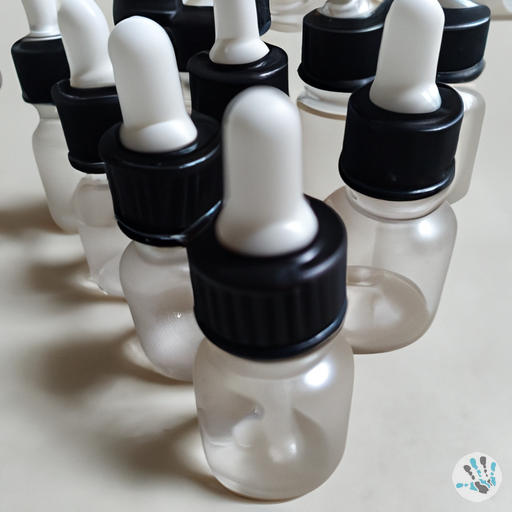
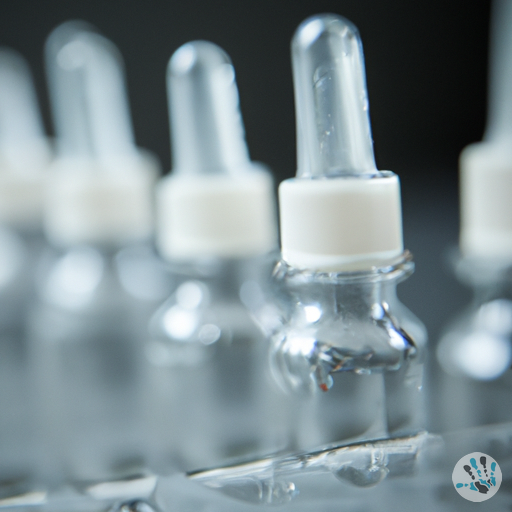
A dropper (teat, collar and glass pipette) draws up liquid and releases it drop by drop. It suits concentrated products where the user wants to place a small amount precisely, and it can handle thicker liquids that would struggle in a pump.
Typical uses:
- Facial serums and oils
- CBD and hemp oils
- Food supplement drops
- Concentrated essential oils
- Hair and beard oils
The pipette can also carry a graduated scale, which matters when dosing is part of the instructions. Our guide to tamper-evident droppers shows the closure range on the dropper side.
Side-by-side comparison
| Criterion | Fine-mist spray pump | Dropper |
|---|---|---|
| Output | Mist over an area | Drops in one spot |
| Best liquid type | Thin, low-viscosity liquids | Thin to oily liquids |
| Dosing by volume | Per press, not graduated | Graduated pipette possible |
| Contact with product | None | Pipette touches skin or surface if misused |
| Parts on the line | One pump unit | Teat, collar and pipette (or assembled dropper) |
| Tamper evidence | Available with ring collar | Available with ring collar |
| Typical user action | Press and spray | Squeeze, draw, release |
Check the liquid before you decide
The format decision usually comes down to the liquid. Before you order a full carton, run these checks with samples:
- Viscosity. Thicker oils and gels may not spray well and can leave the pump sluggish or clogged. If your product behaves like an oil, a dropper is usually the safer choice. For the dropper side, see our article on viscosity and glass pipettes.
- Particles. Botanical extracts, pigments or sediment can block the small channels in a pump. Filter or settle the product and test it.
- Solvents and actives. Alcohol, essential oils and certain actives can affect plastic parts over time. Fill samples and keep them for the full test period you would use for your own stability work.
- Priming. Note how many presses the pump needs before it sprays properly. Customers will notice this on first use.
- Spray pattern. Check that the mist suits the intended use, for example a face mist versus a room spray.
We do not publish stability or compatibility results for your formulation, because they depend on what you put in the bottle. Your own tests are the reference.
Choosing the spray pump variant
Our FineMist range has two DIN18 spray pump versions, differing mainly in collar and closure feature:
- The DIN18 spray pump with black ribbed collar and clear actuator is the standard version, with a dark collar that pairs well with amber glass.
- The DIN18 spray pump with tamper-evident white ribbed collar and clear actuator adds a tamper-evident ring and a white collar for a lighter look.
Choose the tamper-evident version when the product is sold in a channel where a visible seal builds trust, or where your own quality system or retailer expects one. Choose the standard version when appearance and cost simplicity matter more. You can see the whole range in the Sprayers “FineMist” category.
Line impact: what changes when you add a spray
Switching or adding a format does change the filling line, even on the same bottle.
Filling and closing
- A spray pump is fitted as one unit, so there is no pipette to insert and no teat to seat. That removes several steps compared with assembling a dropper from separate parts.
- Fill height matters more than with a dropper. Leave enough headspace so the pump seats cleanly, and check how the liquid level sits relative to the pump tube.
- Set the closing torque on trial bottles. Too loose can leak, too tight can crack a collar or distort a ring. Document the setting that works.
Handling
- Keep pumps in their bag until use to avoid dust inside the actuator.
- Do not store pumps with solvents that could affect plastics.
- Check a sample from each carton for visible damage and for smooth actuation before releasing it to the line.
Packing and shipping
Filled spray bottles are best shipped with the actuator protected. Tamper-evident collars help show if a carton was opened in transit, and a short note about your own transit tests belongs in your quality file.
Running both formats in one range
A simple way to plan:
- Pick one or two bottle sizes in amber or clear glass with the DIN18 neck.
- Assign each product to a format by its liquid: sprays for thin liquids, droppers for oils and concentrates.
- Choose one tamper-evident policy across the range, either all with rings or all without.
- Match the collar color across formats, so spray and dropper variants look like one family.
- Order sample sets of both before you commit to full cartons.
FAQ
Can I use the same DIN18 bottle for a spray pump and a dropper?
Yes. Both fit the DIN18 (GL18) neck, so the bottle can be the same. Confirm the fit on a sample, since glass tolerances vary slightly between bottle types.
Is a spray pump suitable for oils?
It depends on the viscosity. Thin oil blends may spray, but thicker oils often do not. Test your actual liquid with a sample pump. If it does not atomize well, a dropper is usually the better choice.
Do the spray pumps come with a tamper-evident option?
Yes. One of the two FineMist versions has a white ribbed collar with a tamper-evident ring. The other has a black ribbed collar without it.
Can I get samples before ordering a full carton?
Yes. Contact us with your bottle, liquid type and intended use, and we can advise on the right combination and arrange samples.
Ready to compare formats? Browse the shop or ask us for samples and advice on your DIN18 bottle range.